
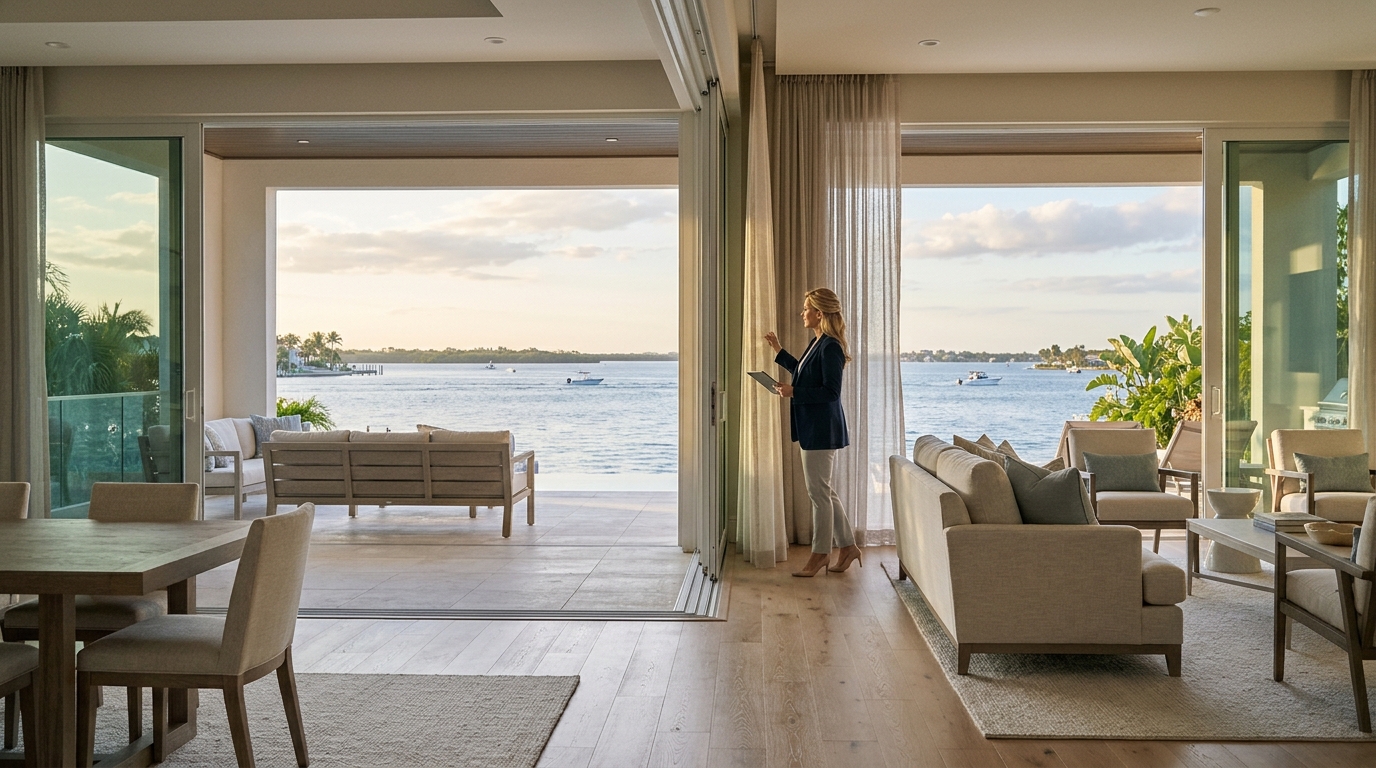
Strategic home staging for luxury waterfront properties maximizes perceived value by highlighting architectural features and waterfront access while mitigating environmental wear. It transforms a house into a lifestyle destination, ensuring buyers focus on the view and structural integrity rather than maintenance concerns. Melissa Gissinger, a Sarasota-based real estate advisor with a background in interior design, leverages this approach to position high-end homes for premium pricing and faster market absorption.
Creating a Visual Narrative That Sells the Lifestyle
Waterfront buyers are purchasing a specific lifestyle, not just square footage. Strategic staging creates a visual narrative that connects the interior living spaces to the exterior water views. By arranging furniture to frame windows and using color palettes that complement natural light, the home feels like a resort destination. This approach is critical in markets like Sarasota, where the connection to the bay or Gulf is the primary value driver.
For example, a home on Longboat Key might use neutral, textured fabrics to reflect the coastal environment, making the space feel expansive and calm. This design choice signals to the buyer that the home is a sanctuary. The implication is that buyers are willing to pay a premium for spaces that feel curated and intentional, rather than cluttered or generic.
Mitigating Environmental Wear and Tear
Salt air and humidity accelerate the degradation of materials in waterfront homes. A standard inspection might reveal minor issues, but staging can mask these imperfections while highlighting the home's overall condition. By using high-quality, durable materials in staging, the property appears well-maintained and resilient. This is particularly important for buyers who are concerned about the long-term costs of owning a coastal property.
Consider a property on Siesta Key where the original flooring showed signs of humidity-related expansion. Replacing or covering these areas with staged, high-end materials can shift the buyer's focus to the home's layout and views. The evidence suggests that buyers are more likely to overlook minor cosmetic issues when the overall presentation is polished and professional. This reduces the risk of price negotiations based on perceived maintenance needs.
Maximizing Waterfront Views and Natural Light
The view is the most valuable asset in a waterfront property, and staging must enhance it. Strategic placement of furniture ensures that key seating areas face the water, creating an immediate emotional connection. Large windows and glass doors should be kept clear of obstructions to allow natural light to flood the space. This technique is essential for making the home feel larger and more open, which is a key selling point in luxury markets.
In a downtown Sarasota condominium, for instance, staging might involve removing bulky furniture to highlight the bayfront view from the living room. The implication is that the home's value is tied to its orientation and light, not just its size. By emphasizing these elements, the staging helps justify a higher price point. Buyers are more likely to make an offer when they can visualize themselves enjoying the view from their new home.
The Role of Design Expertise in Pricing Strategy
Home staging is not just about aesthetics; it is a pricing strategy. A real estate advisor with an interior design background can identify which features add the most value and which detract from it. This analytical approach allows for more accurate pricing and marketing. Melissa Gissinger's experience in design and real estate investment enables her to position homes in a way that appeals to both emotional and rational buyer criteria.
For a luxury home in the Rosemary District, staging might focus on highlighting architectural details that are unique to the property. This differentiation is crucial in a competitive market where many homes offer similar square footage. The evidence shows that homes with professional staging sell faster and often for more than the asking price. The implication is that staging is an investment that can yield a significant return on investment.

Building Buyer Confidence Through Curation
Buyers of luxury properties are often making a significant financial decision, and they need confidence in their choice. Curation through staging reduces uncertainty by presenting a cohesive and well-thought-out space. When every element in the home feels intentional, buyers are more likely to trust the seller's representation of the property's condition. This trust is essential for closing high-value transactions.
A home on Lido Key, for example, might be staged with a mix of classic and contemporary pieces to appeal to a broad range of buyers. This versatility ensures that the home resonates with different tastes and preferences. The implication is that a well-staged home attracts more qualified buyers, increasing the likelihood of a successful sale. By building confidence through curation, the staging process supports the overall goal of achieving the best possible price.
Key Takeaways
- Strategic staging highlights architectural features and waterfront access, maximizing perceived value.
- Staging mitigates environmental wear and tear, reducing concerns about maintenance costs.
- Enhancing natural light and framing views are critical for making the space feel expansive.
- Design expertise allows for accurate pricing and effective marketing strategies.
- Curation builds buyer confidence by presenting a cohesive and intentional space.
It transforms the home into a lifestyle destination, appealing to emotional buyer criteria.
High-quality materials and polished presentation shift focus to the home's layout and views.
Clear sightlines to the water justify premium pricing in luxury markets.
An analytical approach differentiates the property in a competitive market.
Trust in the property's condition supports the closing of high-value transactions.
Frequently Asked Questions
How does staging affect the sale price of a waterfront home?
Staging can increase the sale price by highlighting the property's best features and creating an emotional connection. It helps buyers visualize the lifestyle, which often justifies a premium price.
Is staging necessary for all luxury properties?
While not mandatory, staging is highly recommended for luxury properties. It differentiates the home in a competitive market and can lead to faster sales and higher offers.
What are the most important elements to stage in a waterfront home?
The most important elements are the views, natural light, and architectural features. Furniture should be arranged to frame the water and enhance the flow of the space.
How does an interior design background help in real estate?
Can staging hide structural issues in a coastal home?
Staging can mask minor cosmetic issues, but it should not hide structural problems. Honesty and transparency are essential, and staging should complement, not conceal, the property's condition.
Conclusion
Strategic home staging is a powerful tool for selling luxury waterfront properties. It enhances the visual narrative, mitigates environmental wear, and builds buyer confidence. By leveraging design expertise, real estate advisors can position homes for premium pricing and faster sales. Melissa Gissinger brings this analytical and aesthetic approach to her clients, ensuring that their properties are presented in the best possible light. To explore how strategic staging can benefit your waterfront property, work with Melissa Gissinger for expert guidance and design-forward marketing.